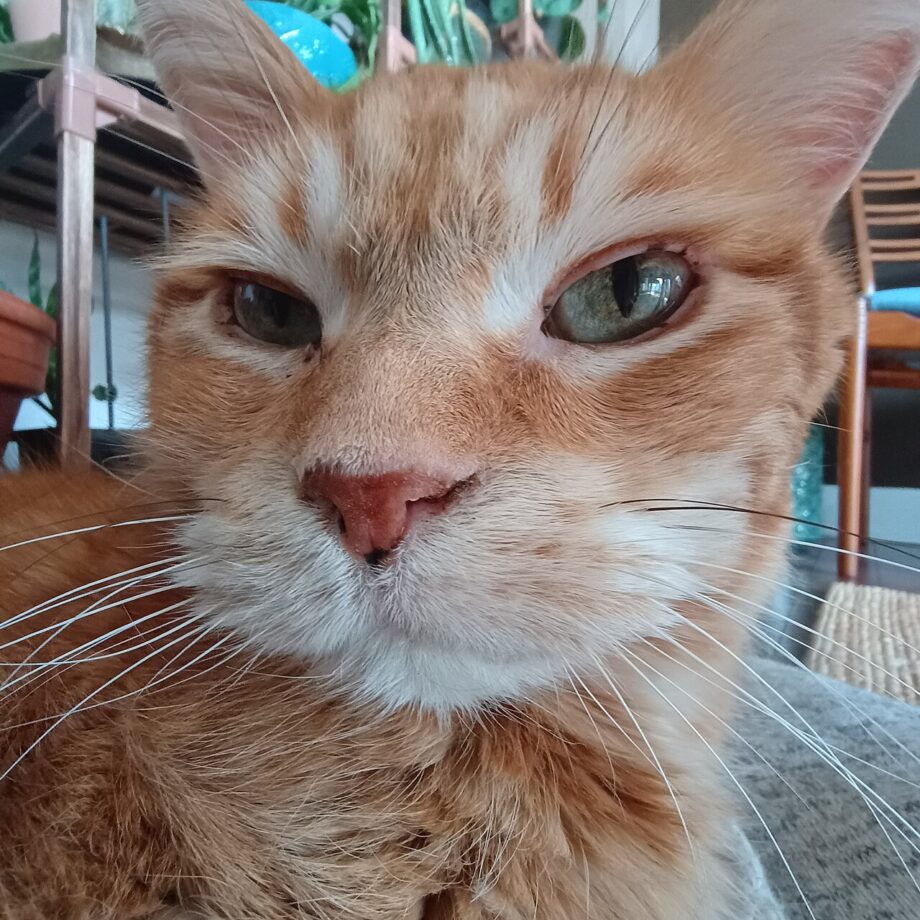
Senior Foreman Nudge does not give interviews. However, after a long negotiation involving three sardines, he has agreed to allow this account of his technique.
Preparation
The first rule, he says, is to be present. A cat who is across the room has no authority over an object. A cat who is seated beside it has the full weight of gravity at her disposal.
Next, he tells us, one must establish eye contact. Not with the human. With the glass. The glass should understand that this is happening.
The approach
Nudge approaches slowly. He lowers his head, extends one paw, and lets it hover above the glass at a distance of two centimetres. This is the Pause. It is the most important part of the process. The Pause says: “I am considering your future.”
The contact
Contact is made with the tip of the paw, not the pad. The tip allows precision. It also allows deniability. He applies a light pressure to the base of the glass, rotating the object a few degrees toward the edge. He does not push. He suggests.
The decision
At this point, the glass is at the lip. Nudge looks at it. He looks at the floor. He looks at the human, who is on the phone. The human does not look back.
The fall
When the glass goes, it goes with grace. Nudge does not watch it fall. He watches the human’s face. This is where the lesson lies. The glass is a distraction. The face is the product.
Aftermath
Following the fall, Nudge sits upright and washes a paw. This is known as the Alibi Wash. It signals that he has been, and always has been, doing something else.
Key takeaways
- Patience beats speed.
- A pause is worth three pushes.
- Never look at what you have done. Look at who is looking.
- Wash, and wash again.
Foreman’s closing words
“A glass on the edge is a decision someone else already made. I am simply the paperwork.”
Nudge then lay on the notes, ate a sardine, and has not been seen since.